

© Chrystel Lebas
Chrystel Lebas
Chrystel Lebas is a London-based visual artist whose work explores the complex relationship between humans and the natural world. She uses photography, film, and sound to investigate landscapes and their hidden histories, often returning to the same sites over long periods, especially during moments of environmental change. In recent years, her practice has focused on landscape transformation and the Anthropocene.
Her project Regarding Forests combined large-scale photographs, sound, and scent in an immersive installation commissioned by the Wellcome Collection in London and later shown at the German Hygiene Museum in Dresden. Lebas has also collaborated with scientists at the Natural History Museum in London on a long-term project supported by the Calouste Gulbenkian Foundation. This work retraced the journeys of ecologist Sir Edward James Salisbury (1886–1978) and resulted in a major solo exhibition at Huis Marseille, Museum for Photography in Amsterdam, which then toured the UK. It was accompanied by the publication Field Studies: Walking through Landscapes and Archives, which won the Kraszna-Krausz Foundation Best Photography Book Award 2018 and Best Dutch Book Design.
A graduate of the Royal College of Art, Lebas has exhibited internationally, including at the Wellcome Collection London, Huis Marseille Museum for Photography Amsterdam, De Pont Museum Tilburg, Scottish National Gallery, Royal Academy London, Victoria and Albert Museum, Photographers’ Gallery, Palais des Beaux-Arts Brussels, Museum of Modern and Contemporary Art Rijeka, Musée de la Chasse et de la Nature Paris, and Palais de Tokyo, Paris.
Her works are held in public and private collections including Huis Marseille Museum for Photography, the Scottish National Gallery, the Victoria and Albert Museum, and the Bibliothèque Nationale de France. She has published three monographs: L’espace temps – Time in Space (2003), Between Dog and Wolf (2006), and Field Studies: Walking through Landscapes and Archives (2017).
Landscape Observations
In summer 2023, Chrystel Lebas was invited by the Passage Art-Residency-Programme to explore the Dübener Heide region in Germany, a landscape shaped by ongoing transformations resulting from former coal mining and environmental change.
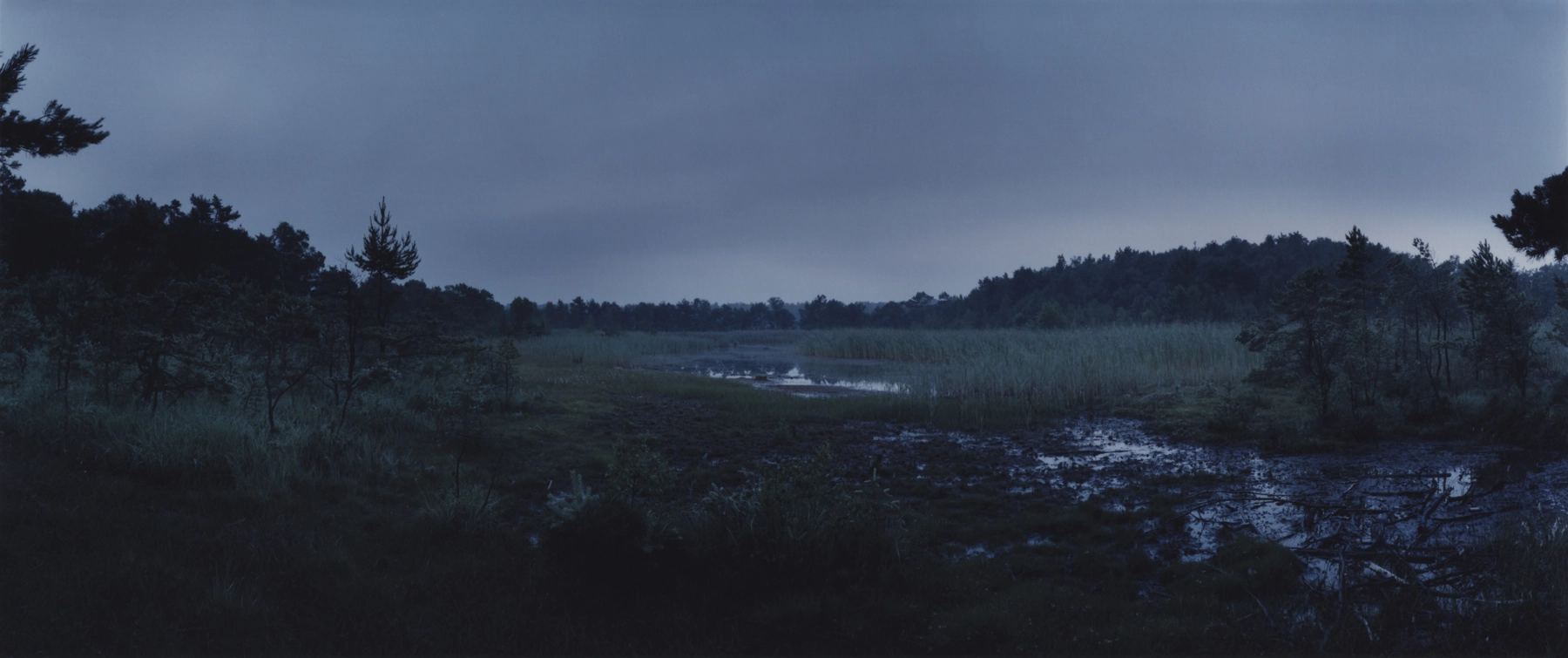
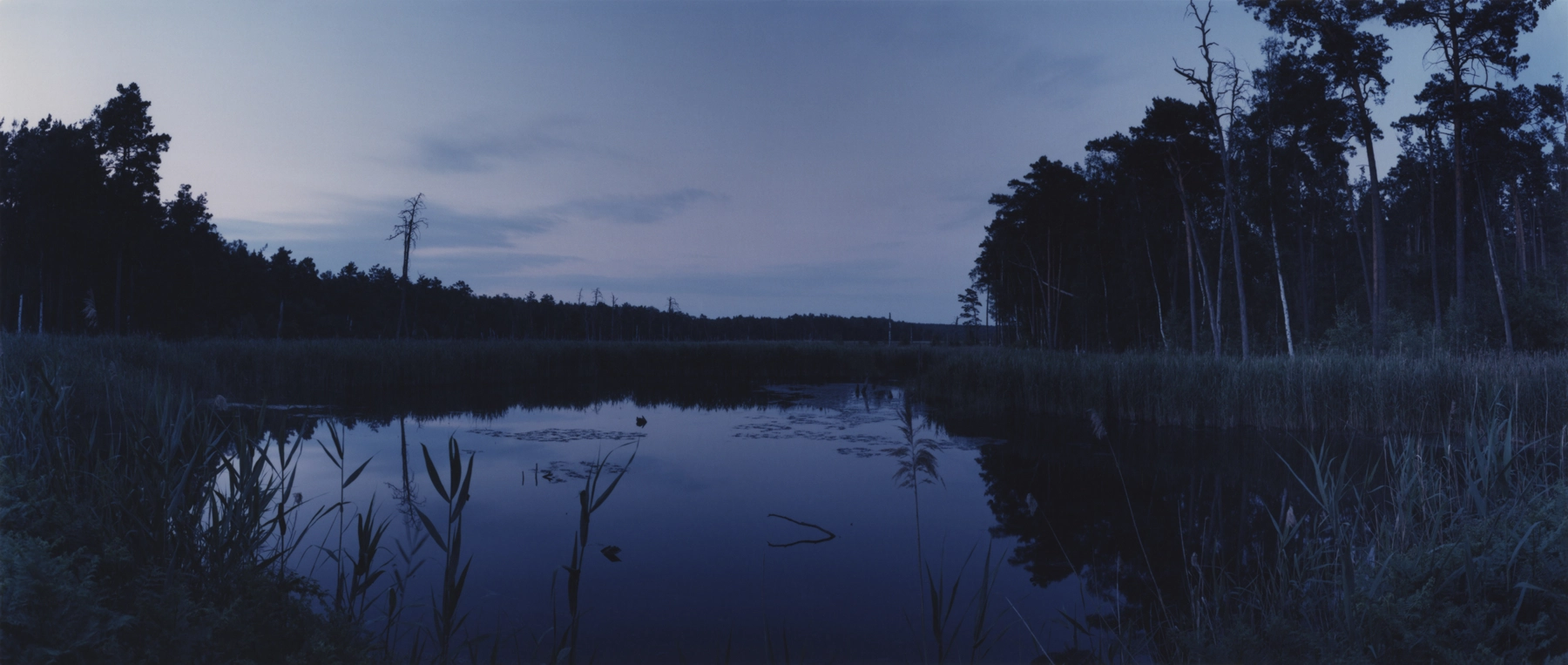
One of her focal points was the Presseler Heidewald and Moorgebiet, a protected natural habitat southeast of the Dübener Heide. Moors, wetlands, small heathlands, diverse forests, ponds and meadow-lined streams form a large, contiguous complex of near-natural habitats, in contrast to the surrounding agricultural land and former mining areas. In these moors and wetlands, cranes, storks, and occasionally white-tailed eagles, along with other rare bird species, find nesting grounds. Lebas was drawn to this complex landscape, which has evolved from a largely unspoiled environment into a terrain profoundly shaped by human activities such as agriculture, forestry, and peat extraction.
Germany has experienced severe droughts and floods in recent years, and during Lebas’s visit the forests and bogs, key components of this ecosystem, were slowly drying out. By walking, observing, and recording these changes over time, she witnessed the fragility of this environment as the bogs gradually receded due to prolonged drought. She photographed these slow transformations within the forested areas while recording the sounds of nesting cranes. Both photographs and sound recordings were captured during crepuscular hours and at dawn, when animal activity is at its peak.
Lebas also researched sites connected to the naturalisation of former mining landscapes, where forests and lakes were introduced to reshape the terrain. As part of this research, she visited the Photography Archive at the Kunstmuseum Moritzburg Halle (Saale), where she was introduced to the project Fotografie und Gedächtnis. Initiated in the early 1990s, the project invited photographers from West Germany to document mining landscapes prior to their closure. Lebas selected photographs by Reinhard Hentze and re-photographed the same views around Bitterfeld. Since then, former open-cast mines have been flooded and planted with trees, forming a constructed landscape designed to encourage leisure and recreational activities.
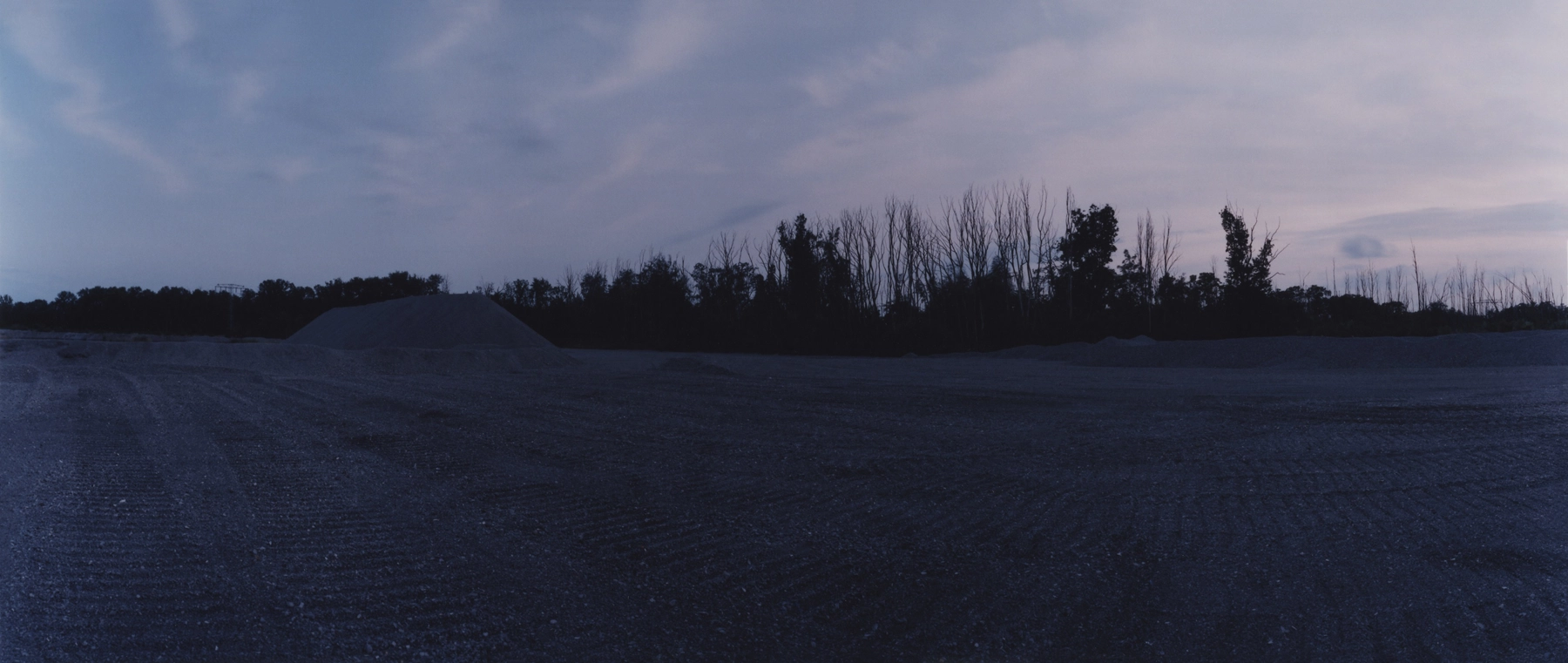
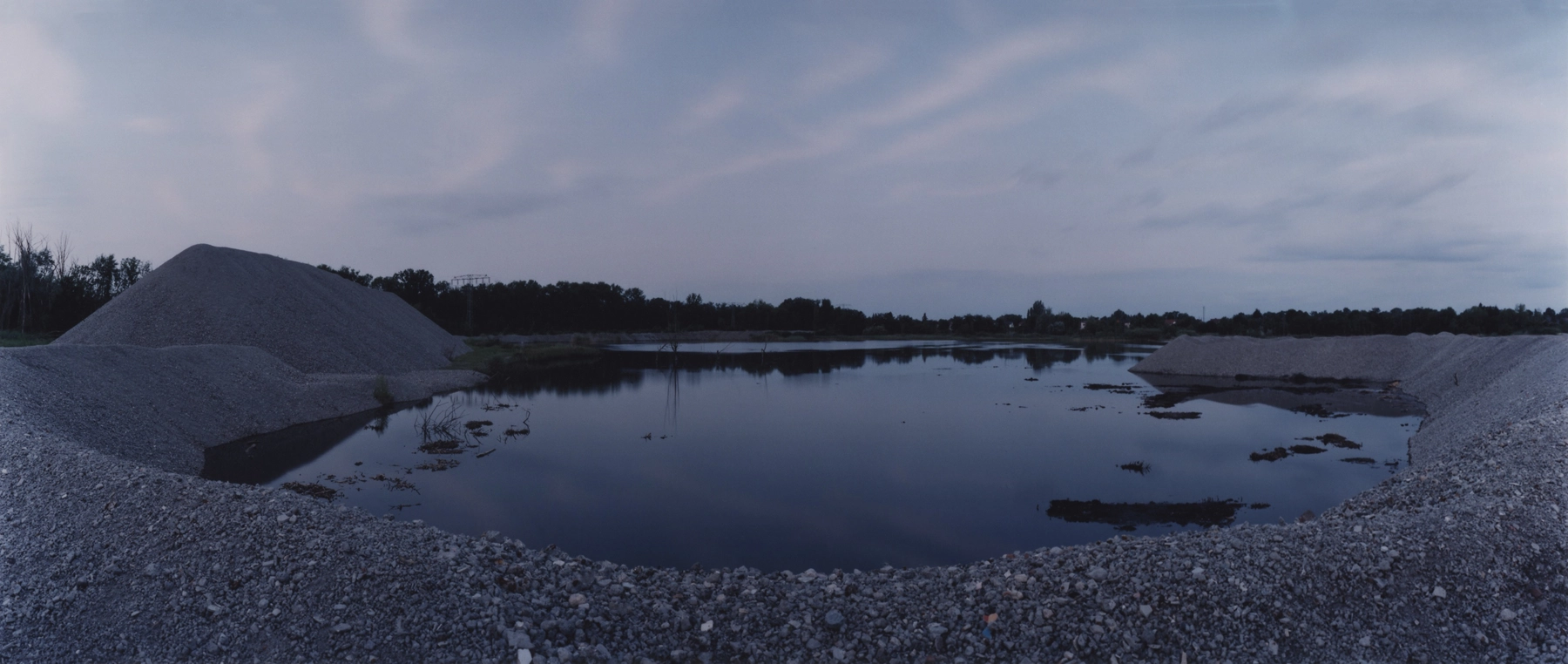
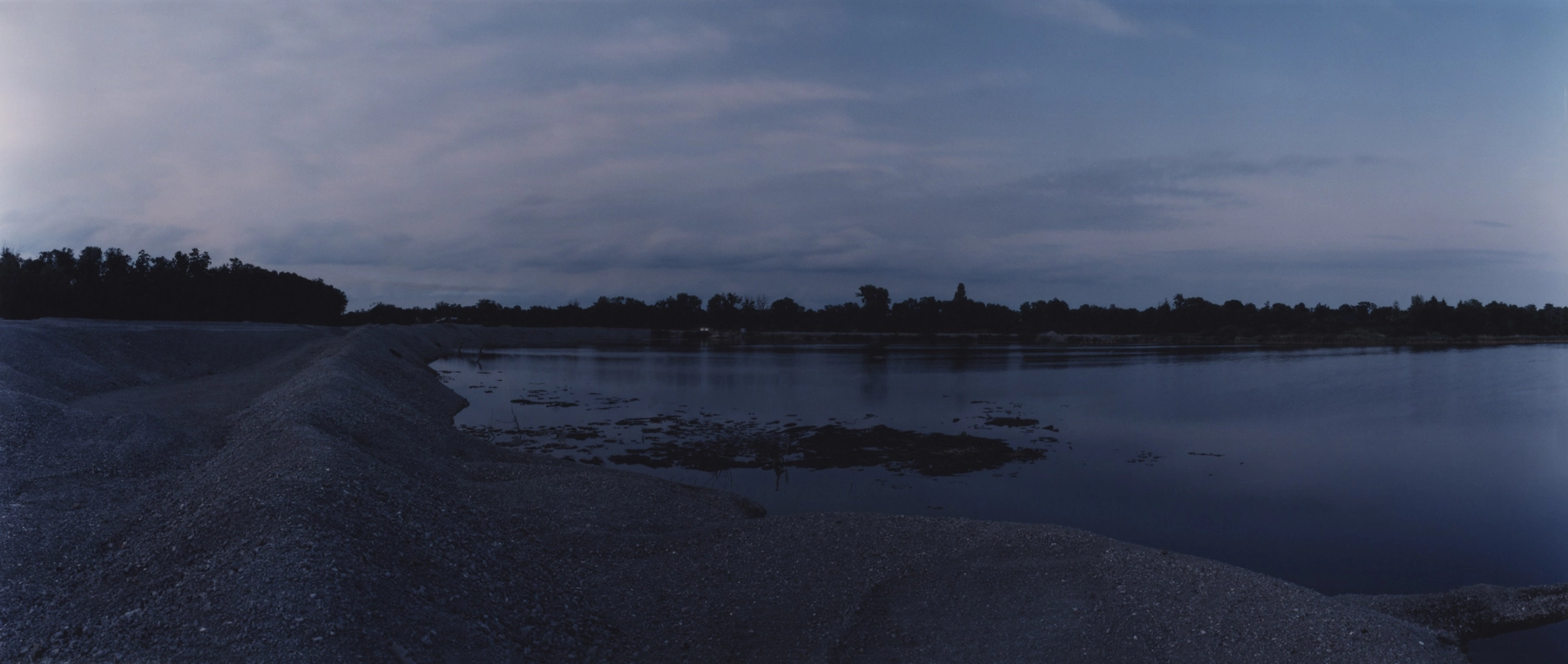
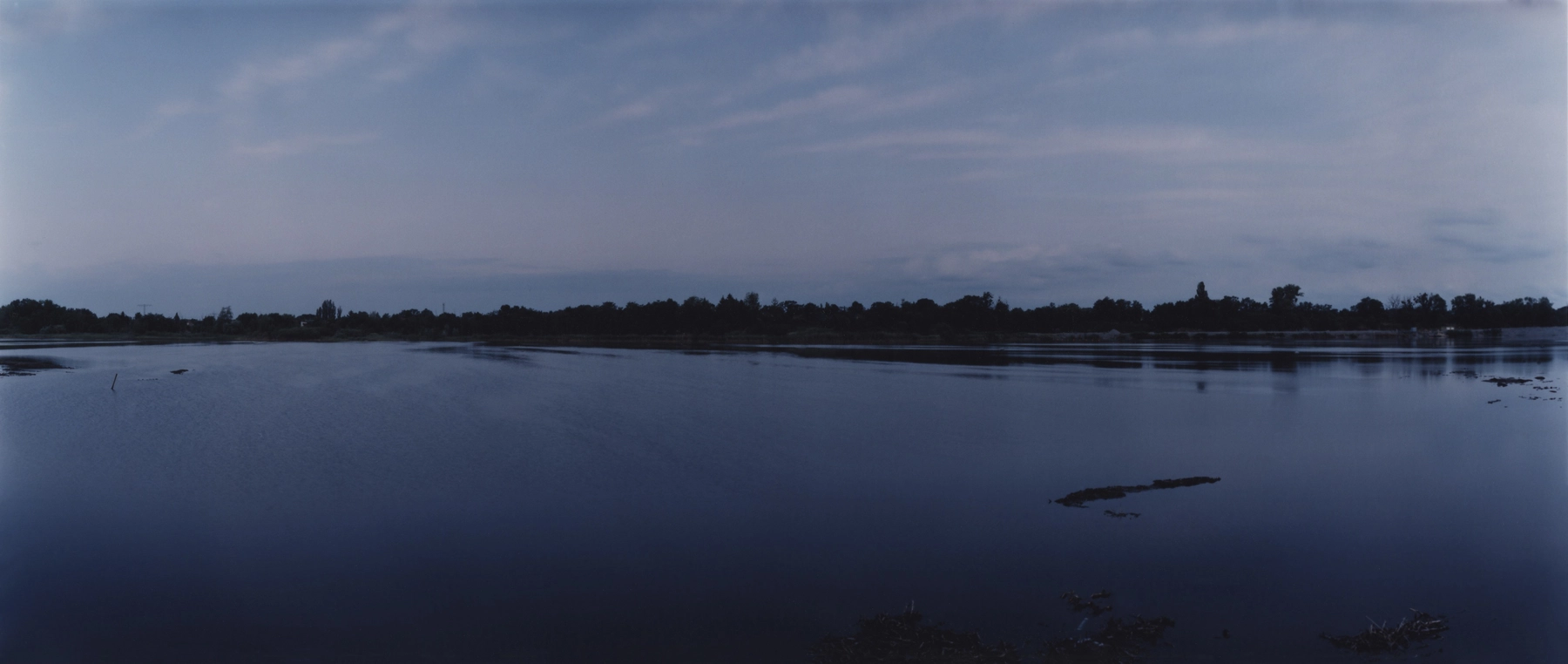
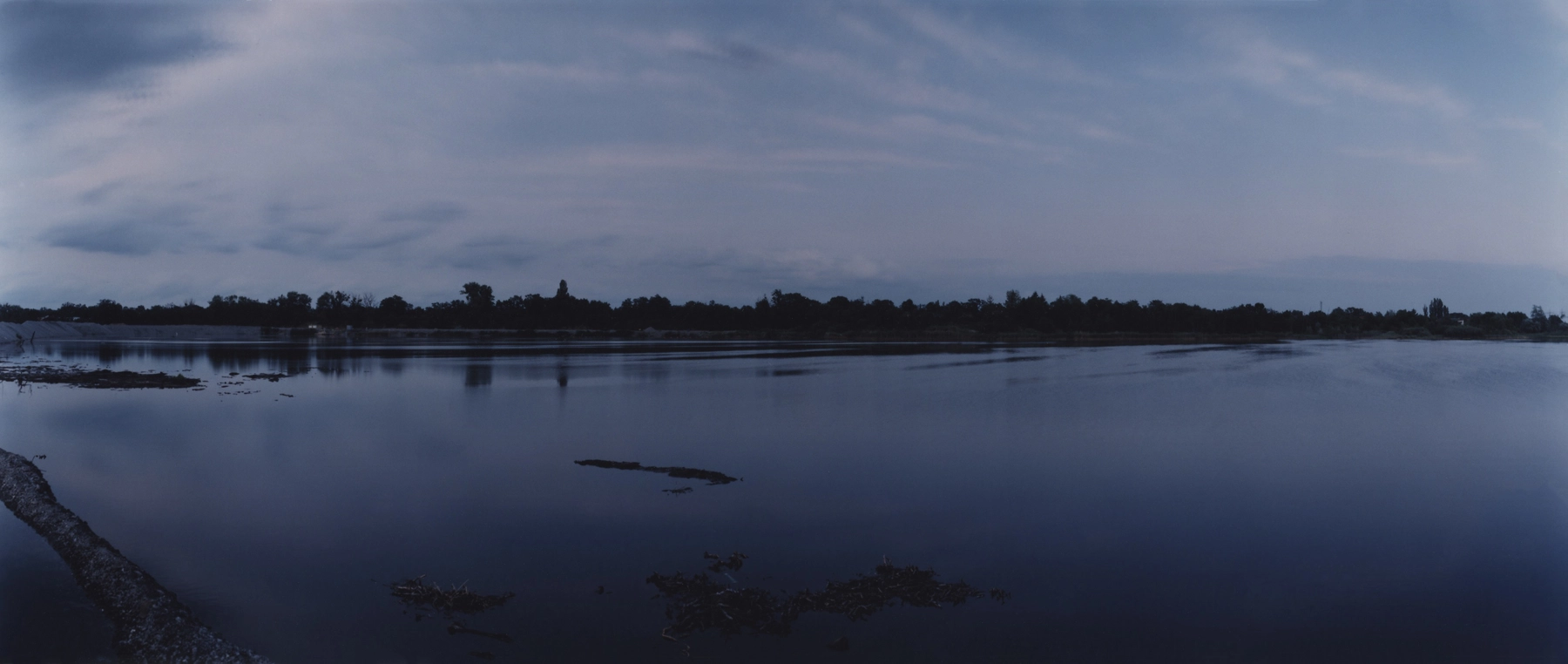
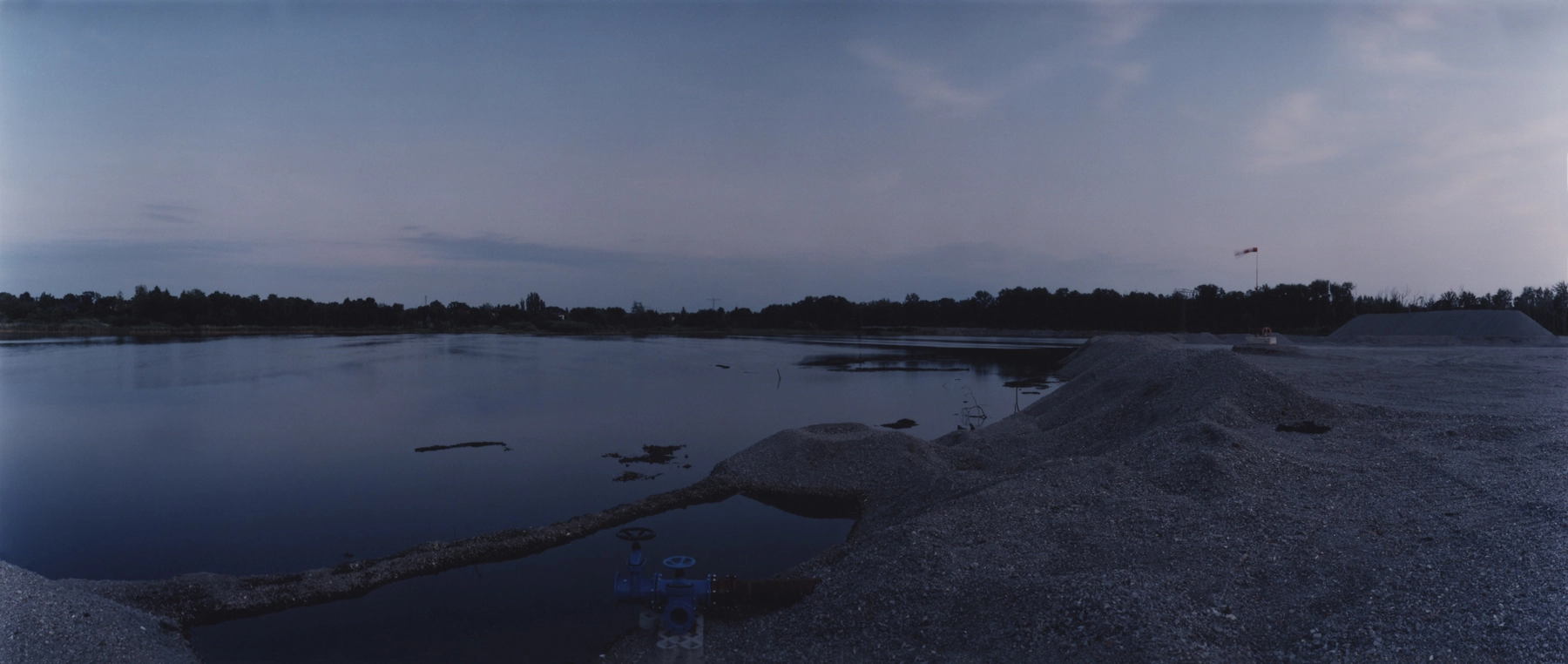
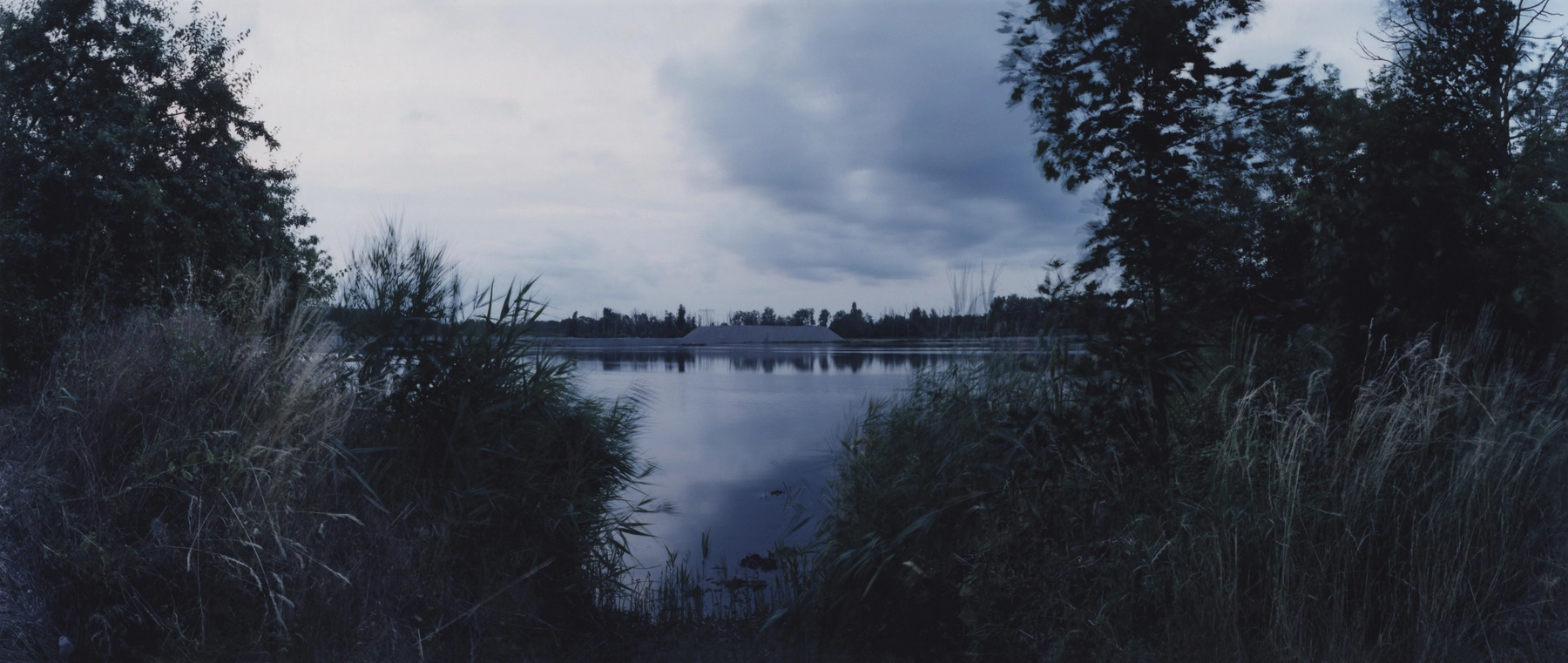
Another site that captured her attention was Grube Johannes, also known as Silbersee, a former open-cast lignite mine surrounded by dead trees. After mining operations ceased, the remaining pit was used from the mid-1930s onwards to dispose of wastewater from the Agfa film factory in nearby Wolfen. The name “Silbersee” (“Silver Lake”) derives from the silver compounds used in photochemical processes. Additional wastewater from nearby synthetic fibre production created a highly sulphur-rich sludge, causing severe odour pollution and health problems for local residents. Since 2018, the contaminated lake has been undergoing remediation, although the process has faced setbacks due to increased hydrogen sulphide emissions. A water shaft installed to ventilate the lake ultimately failed because of persistently high temperatures. Lebas photographed the site and constructed a multi-section panorama as a topographical record, documenting the ongoing attempt to restore this fragile landscape.
All images from the work: ‘Landscape Observations’, 2023
Image 1,2: Presseler Heidewald und Moorgebiet
Image 3,4: Grube Johannes known as Silbersee
Image 5 – 8: Grube Johannes, multi-section panorama
Image 9: Grube Johannes
In Search of a Landscape
“In Search of a Landscape” is a short film made in 2024 that combines Chrystel Lebas’s experiences and artistic practice with a contemplative view of the landscape surrounding the Bleesern stud farm. The residency 2024 was part of KOBRA, a multi-year project (2025–2030) that examines regional transformation processes between the Fläming and the Dübener Heide and promotes artistic research in this context.